
The Reaping
Welcome to the Most Dystopian Democracy on Earth

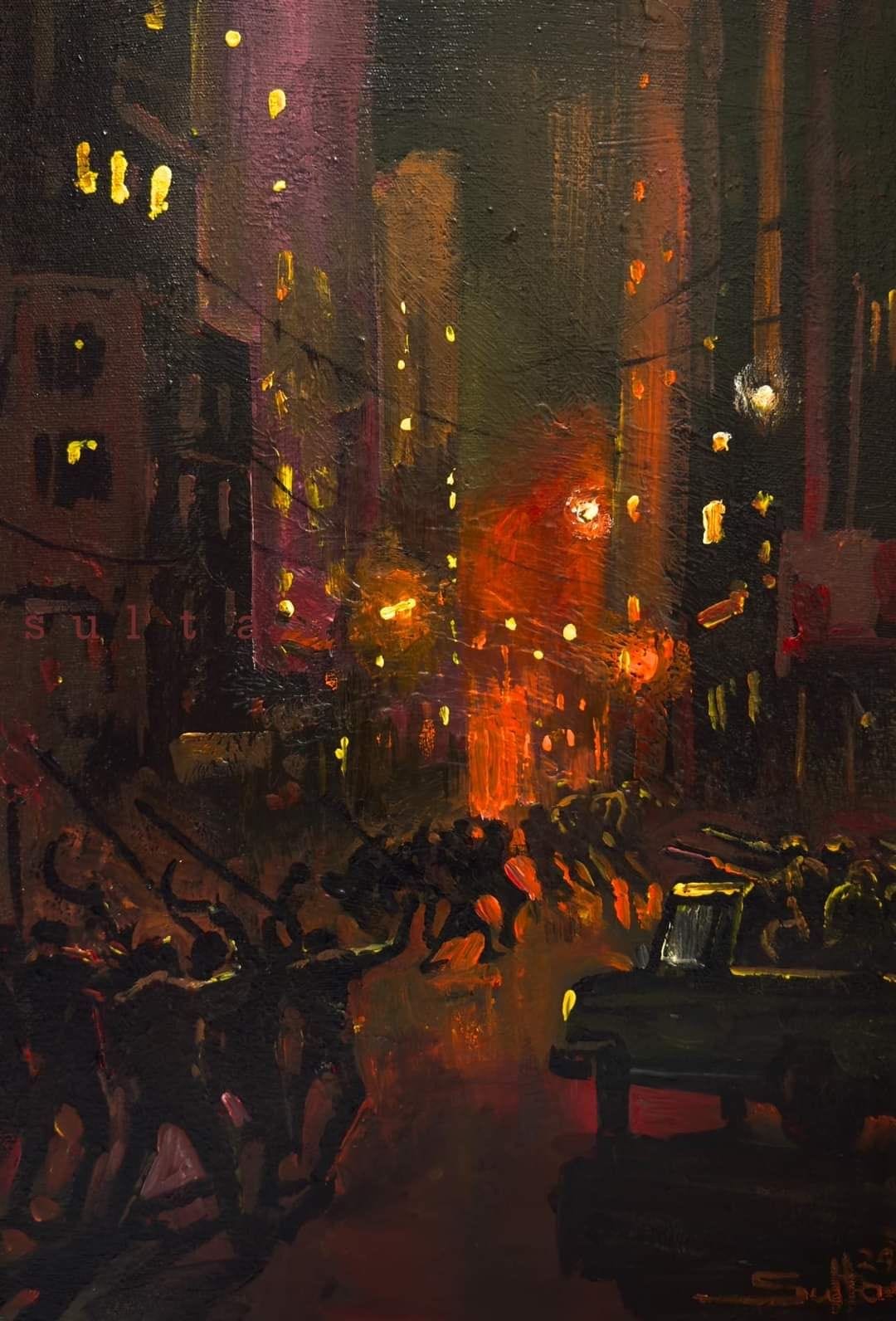
There is a city in The Hunger Games where the lights never go off, the food never runs out and the people dye their skin in colors that do not exist in nature and watch children kill each other on television and call it their culture. It is called the Capitol. It sits at the center of Panem, ringed by twelve districts that exist for one purpose: to feed it. Coal from District 12. Grain from District 11. Luxury goods and technology from the districts closest to the Capitol’s favor. The arrangement is simply the order of things, enforced by soldiers in white, starvation, and the annual reminder that the state can take your children and there is nothing you can do about it.
And then we have Nigeria.
It sits on the largest proven oil reserves in Africa. It is, by population, the largest country on the continent, over 220 million people poured into a geography that stretches from the mangroves of the Niger Delta to the dry savannah of the north. It has produced billionaires. It has produced literature that changed the world, music that now plays in every country on earth, films, fashion, philosophy, food. It is a country of staggering beauty and staggering possibility. It is also a country where the people who live on top of the oil are among the most environmentally devastated and economically abandoned communities in the world. Where the revenues from that oil flow to a federal capital built in the center of the country specifically so it would belong to no one tribe, and where it ends up belonging, in practice, to a governing class that uses it as a personal endowment. Where a child in Zamfara state and a child in Borno state and a child in the creeks of Bayelsa all subsidize a political culture in Abuja that has perfected the art of spending without delivering.
The Capitol does not pretend to serve the districts. That is what makes it a clean villain. Nigeria is harder to indict because it is surrounded by the language of democracy, of federalism, of a constitution that guarantees rights, of elections held on a schedule, of a free press that publishes what the government would prefer it did not. The comparison is about what happens when the place that extracts is not the place that suffers. When distance, whether geographic or political or economic, insulates the powerful from the consequences of their decisions. When the people at the center have learned to receive without feeling any particular obligation to the people whose labor and land made the receiving possible.
Think about the Niger Delta. For decades, oil companies have operated in the delta with the blessing and protection of the Nigerian state, and the people of the delta have watched their fishing waters turn black, their farmland seep with crude, their children develop respiratory diseases from gas flares that burn year-round. The money from that oil does not stay in the delta. It goes to Abuja, where it is disbursed through a formula that has been litigated and renegotiated for generations without ever quite delivering justice to the place that makes the wealth possible. Ken Saro-Wiwa organized his people nonviolently, wrote about what was being done to them, brought it to the world’s attention, and the Abacha government hanged him for it in 1995. The oil continued to flow. The gas flares continued to burn. The people continued to die young.
In Panem, the equivalent of this is so common it has a name. It is simply Tuesday.
Now consider what Boko Haram has been allowed to become. Consider what it means that, in 2026, in a country with a functioning military and a defense budget and a president who flew first class to his last international summit, groups of armed men can enter a town in the south west of Nigeria, take 45 school children, a principal and several teachers, and the president of the federal republic will wait nearly a week before addressing the nation. And when he finally speaks, what he offers is not a plan, an accounting, or a resignation, not even the minimum dignity of visible rage on behalf of the people who have been taken. What he offers is prayer. Keep praying, he says. As though the families of the kidnapped have not already prayed every hour of every day since the people they love were dragged into the bush. As though prayer is a policy. As though God is the one who defunded the local security infrastructure, posted soldiers elsewhere, allowed the roads to remain unwatchable and the intelligence networks to remain corrupt and the early warning systems to remain unfunded for decades while the budget allocations were rerouted into private pockets.
This is the Capitol move, executed in full. President Snow does not rush to the districts when something goes wrong. He does not hold press conferences. He does not explain himself. The districts exist to absorb suffering, and the Capitol’s job is to remain comfortable while the absorbing happens. The difference is that Snow is honest about the transaction. He does not tell the districts to pray. He tells them that their suffering is the point. There is a grotesque integrity to that. What the Nigerian government offers is worse in a particular way, because it wraps abandonment in the language of shared faith, as though invoking God is the same as invoking the state’s responsibility to its people. It is not. God did not collect taxes. God did not sign the defense appropriations bill. God did not appoint the security chiefs who have presided over the northeast’s slow hemorrhage for over a decade. The men who did those things are alive, many of them comfortable, and none of them are praying hard enough to give that comfort up.
The horror is the simultaneity. That on the precise day a woman was releasing her second desperate video from a kidnapper’s camp, ten days into captivity, her government yet to secure her release, the same country was trending on social media for horse parades and matching outfits. That both things could occupy the same timeline and generate roughly the same level of engagement. The country has become fluent enough in its own tragedy that it no longer requires a pause. This is what the Capitol calls normal. This is what it looks like when desensitization is complete, not a single dramatic moment of surrender but a slow accumulation of horrors that the culture learns to move past. The woman in the video and the man on horseback exist in the same Nigeria, on the same day, and the country absorbed both without blinking. That is not resilience. That is something closer to the districts learning not to cry at the reaping.
The Hunger Games are television. They are designed to be watched, discussed, felt. The tributes have stylists and interviews and training scores. The audience has favorites. There is drama and heartbreak and romance manufactured on top of the violence so that the violence becomes entertainment rather than atrocity. The Capitol’s citizens do not think of themselves as monsters because they have been given a narrative in which the children who die are characters, not people. The spectacle is the mechanism by which murder is made palatable, and the distance between the viewer and the victim is maintained at exactly the right length.
Nigeria has its own relationship with spectacle. The Nigerian political class has elevated the performance of power into something close to an art form. The convoys that shut down roads for hours while ordinary people wait in traffic for the motorcade to pass. The campaigns that cost hundreds of millions of Naira while teachers go unpaid for months in the same state the candidate is asking to govern. The speeches about the common man delivered from a podium that cost more than the common man will earn in a decade. And then, when the kidnappings happen, when the mass graves are discovered, when the villages are burned, the same political class that performed such elaborate visibility in election season goes suddenly, conveniently quiet. This silence is calibrated. It says: this is not the kind of suffering that requires our attention. These are not the people whose pain has political consequences for us.
That calibration is a Capitol calculation. The Capitol does not mourn District 12 casualties. It does not hold vigils for tributes who die in training. Those deaths are not in the category of things that matter. Nigerian politicians have created their own version of this hierarchy, one in which a kidnapping in Ogbomosho moves them less than a threat to their electoral coalition in Lagos, in which the southwest is perpetually legible as a problem to be managed rather than a population to be protected. The people of Borno and Yobe and Adamawa have been living under emergency conditions for over a decade. They have buried their dead, rebuilt their schools, and watched their rebuilt schools get burned again. They have done all of this without a single Nigerian president finding the moment sufficiently urgent to cancel a foreign trip.
The Capitol, at least, does not ask the districts to be grateful.
It's so scary that they no longer even feel the need to pretend to care. Nothing like, "let me do this so these people will vote for me" because they know that they don't need the people's votes to stay in office.
Scary times to be Nigerian.